


.png)
.png)
Everything small business owners need to know about SBA 7(a) and 504 loans — requirements, documents, timeline, and tips to get approved faster.
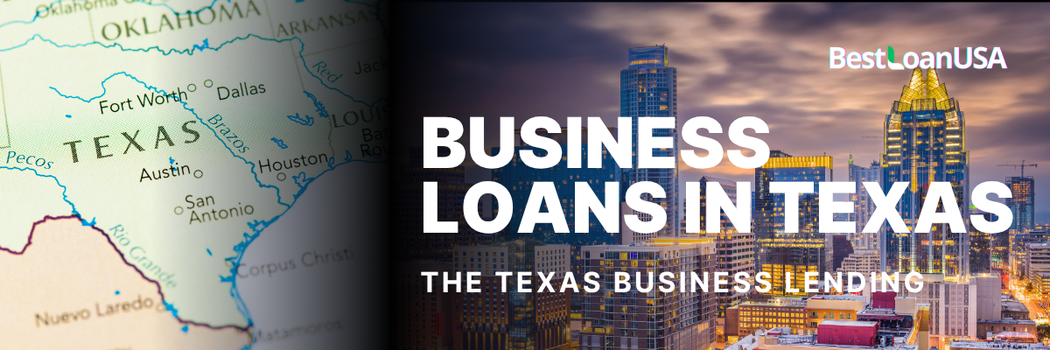
Business Loans in Texas: What Small Business Owners Need to Know
Texas has the second-highest number of small businesses in the country — over 3.2 million — and a business environment consistently ranked among the most favorable in the United States. No state income tax, relatively light regulation, a diversified economy, and sustained population growth have made Texas a destination for both entrepreneurs and the lenders who serve them.
That competition among lenders is good news if you know how to use it. But navigating the Texas lending landscape — banks, SBA programs, alternative lenders, and state-level resources — requires knowing what's available and what you actually qualify for.
This guide covers everything Texas small business owners need to know about accessing capital, from the SBA district offices that serve each region to the industries that shape local lending.
The Texas Business Lending Environment
Texas benefits from a unusually deep pool of lenders. The state's size and economic output attract national banks, regional community banks, credit unions, SBA preferred lenders, and online alternative lenders — all competing for Texas borrowers.
Key characteristics of the Texas lending market:
- No state income tax — Texas businesses retain more earnings, which improves cash flow metrics that lenders evaluate (DSCR in particular)
- High SBA loan volume — Texas consistently ranks in the top 3 states by SBA 7(a) loan volume, meaning more lenders here have SBA experience and SBA-preferred status
- Strong community banking network — Texas has more FDIC-insured institutions than any other state, giving small businesses more relationship banking options than in states dominated by large national banks
- Minimal usury restrictions on commercial loans — Texas has limited interest rate caps on commercial lending, which means alternative lenders operate freely here. More options, but more due diligence required.
SBA Programs in Texas
The U.S. Small Business Administration serves Texas through two district offices:
Texas District Office (Dallas/Fort Worth region)
Serves North Texas, including Dallas, Fort Worth, Plano, Arlington, and surrounding areas.
Phone: (214) 767-0605
Coverage: North and Central Texas
South Texas District Office (San Antonio)
Serves South and Central Texas, including San Antonio, Austin, Corpus Christi, and the Rio Grande Valley.
Phone: (210) 403-5900
Houston District Office
Serves the Gulf Coast region, including Houston, Galveston, Beaumont, and Southeast Texas.
Phone: (713) 773-6500
Most relevant SBA programs for Texas small businesses:
SBA 7(a) Loan Program — The primary SBA product for working capital, equipment, real estate, and business acquisition. Loan amounts up to $5 million, terms up to 25 years for real estate. Texas had over $3.5 billion in SBA 7(a) approvals in fiscal year 2024, among the highest of any state.
SBA 504 Loan Program — Designed for major fixed asset purchases: commercial real estate and heavy equipment. Particularly relevant for Texas manufacturers, energy sector businesses, and commercial property buyers. The 504 structure (bank + SBA debenture) allows lower down payments and long terms on large purchases.
SBA Microloan Program — Loans up to $50,000 through nonprofit intermediaries. Useful for newer businesses or those that don't yet qualify for bank-level financing. Texas has multiple SBA microloan intermediaries, including LiftFund (San Antonio) and PeopleFund (Austin).
SBA Express Loans — Faster SBA process (36-hour SBA response) for loans up to $500,000. Available through SBA Express lenders. Useful when speed matters and the loan amount fits within the Express ceiling.
Texas-Specific Lending and Grant Resources
Texas Economic Development Corporation (TxEDC)
Supports economic development across the state, including connections to financing resources for businesses that are expanding, relocating to Texas, or creating jobs. Not a direct lender, but a useful starting point for larger growth-stage businesses.
Governor's Small Business Programs
The Texas Governor's Office of Economic Development coordinates programs including enterprise zones and tax incentives that can indirectly improve a business's financial profile for lending purposes.
Texas Capital Fund
Infrastructure and real estate development financing for businesses in rural Texas communities, administered through the Texas Department of Agriculture. Relevant for businesses outside major metros.
LiftFund
One of the largest SBA microloan intermediaries in the country, based in San Antonio. Serves small businesses across Texas with microloans ($500–$1 million), CDFI-backed products, and business development support. Particularly active in underserved communities and minority-owned businesses.
PeopleFund
Austin-based CDFI offering small business loans from $1,000 to $350,000 with flexible qualifying criteria. Serves businesses across Texas that may not yet qualify for bank financing.
BCL of Texas
Community lender focused on small business and real estate lending in Central and North Texas. Offers loans to businesses that are underserved by traditional banks.
Major Texas Markets: What Lenders Look for by City
Houston
The Houston market is heavily influenced by energy — oil and gas, petrochemical, oilfield services — but has diversified significantly into healthcare, logistics, construction, and professional services. Lenders in Houston are experienced with energy sector volatility and often underwrite energy-adjacent businesses with an understanding of commodity price cycles.
Key Houston lender considerations:
- Energy sector businesses may face tighter underwriting during commodity downturns, even with strong historical revenue
- Construction and commercial real estate lending is active — Houston is one of the highest-volume commercial construction markets in the country
- The Port of Houston drives significant demand for logistics and supply chain financing
- Large immigrant business community — international wire transfers and foreign revenue sources are common and well-understood by Houston lenders
Dallas / Fort Worth
DFW has become one of the most diversified business markets in the country — finance, technology, healthcare, manufacturing, retail headquarters, and logistics all have significant presence. The DFW Metroplex is now one of the fastest-growing urban economies in the United States.
Key DFW lender considerations:
- Strong SBA lending market with multiple preferred lenders competing actively for business
- Technology and professional services companies have good access to revenue-based and unsecured lending products
- Commercial real estate market is active — both owner-occupied and investment property financing is widely available
- Corporate relocations (many major companies have moved HQs to DFW) have created demand for business services that lenders recognize
San Antonio
San Antonio's economy is anchored by military installations (Fort Sam Houston, Lackland, Randolph), healthcare, tourism, and a growing technology sector (Cybersecurity Center of Excellence). The city has a high percentage of Hispanic-owned businesses and is served by several CDFIs focused on underserved communities.
Key San Antonio lender considerations:
- Strong SBA microloan and CDFI presence through LiftFund and other organizations
- Military-adjacent businesses (government contractors, veteran-owned businesses) have access to SBA Veteran Advantage and SBIR programs
- Tourism and hospitality lending is active but sensitive to travel trends
- Minority Business Development Agency (MBDA) Business Center in San Antonio serves Hispanic and minority-owned businesses
Austin
Austin's economy has transformed into one of the country's most dynamic technology and creative industry markets. Tesla, Oracle, Apple, and hundreds of startups have established significant Austin presence. The city's growth has created strong demand across nearly every business sector.
Key Austin lender considerations:
- Technology and SaaS businesses face a different underwriting reality than traditional businesses — many online lenders are better suited than banks for high-growth, subscription-revenue companies
- Commercial real estate prices have risen sharply — both a challenge (higher down payments) and an opportunity (existing owners have significant equity)
- PeopleFund and BCL of Texas serve the Austin market with CDFI products for businesses that don't yet qualify for bank financing
- Strong venture and angel ecosystem means some Austin businesses have equity funding options before needing debt
Industries That Shape Texas Business Lending
Oil and Gas / Energy
Texas is the largest energy-producing state in the country. Lenders with energy sector experience are common in Houston, Midland/Odessa, and Tyler. Energy businesses should seek lenders who understand commodity cycles — banks that don't specialize in energy may be overly conservative during price downturns.
Construction and Real Estate
Texas construction lending is among the most active in the country, driven by population growth and commercial development. Construction businesses with strong bonding capacity and contracts in hand have good access to both bank lines of credit and SBA 7(a) products.
Agriculture and Ranching
Rural Texas has a well-developed agricultural lending ecosystem through Farm Credit, USDA business programs, and community banks that specialize in ag lending. FSA (Farm Service Agency) loans are available for agricultural operations.
Healthcare
Texas Medical Center in Houston is the largest medical complex in the world. Medical practices, dental offices, home health agencies, and healthcare ancillaries have access to specialized healthcare lending products through both national and regional lenders.
Manufacturing
Texas is the second-largest manufacturing state in the country. Manufacturers have access to SBA 504 financing for equipment and facilities, as well as asset-based lending products that leverage equipment and receivables.
Restaurants and Hospitality
Texas has one of the highest restaurant densities in the country. Restaurants are considered higher-risk by most lenders — owner experience, location demographics, and revenue consistency matter more than the concept. SBA 7(a) is commonly used for restaurant buildouts; MCAs are frequently marketed to restaurants but should be evaluated carefully against alternatives.
What Texas Lenders Typically Look For
Regardless of lender type, Texas underwriters generally evaluate:
- Personal credit score: 680+ for bank and SBA products; 600+ for alternative lenders
- Time in business: 2+ years for banks; 6–12 months for alternative lenders
- Annual revenue: Varies by loan size, but $100,000+ is generally the floor for bank consideration
- DSCR: 1.25+ for bank and SBA products; alternative lenders may go lower
- Collateral: Required for most bank and SBA loans over $50,000; equipment financing uses the equipment itself
Avoiding High-Cost Lending in Texas
Texas's light regulatory environment on commercial lending means alternative lenders, merchant cash advance providers, and brokers operate with minimal restrictions. This creates both more options and more risk.
Key things to know:
- Texas has no commercial usury cap on most loan types — rates of 40%+ APR are legal on business loans
- MCA providers operate freely and are not subject to lending regulations — factor rates must be converted to APR for meaningful comparison
- Confession of judgment clauses are enforceable in Texas — read any agreement carefully before signing
- The Texas Office of Consumer Credit Commissioner (OCCC) regulates some commercial lending but has limited jurisdiction over MCA products
The most effective protection is comparison: getting multiple offers and calculating total cost of capital across all of them before committing to any product.
When you're ready to take the next step, explore commercial real estate loan options in Texas — compare bank and alternative lenders serving your market before you commit to any single product.
Texas business owners exploring commercial real estate financing will also want to understand when commercial real estate refinancing makes sense, especially as rates shift. Real estate investors operating in Texas can also benefit from DSCR loans that qualify without tax returns — a major advantage for self-employed borrowers in a state with no income tax.
💡 BestLoanUSA works with bank and alternative lenders serving Texas businesses across all major markets. See how to pre-screen your options with no credit impact before you apply.
.png)
.png)
.png)






.svg)