
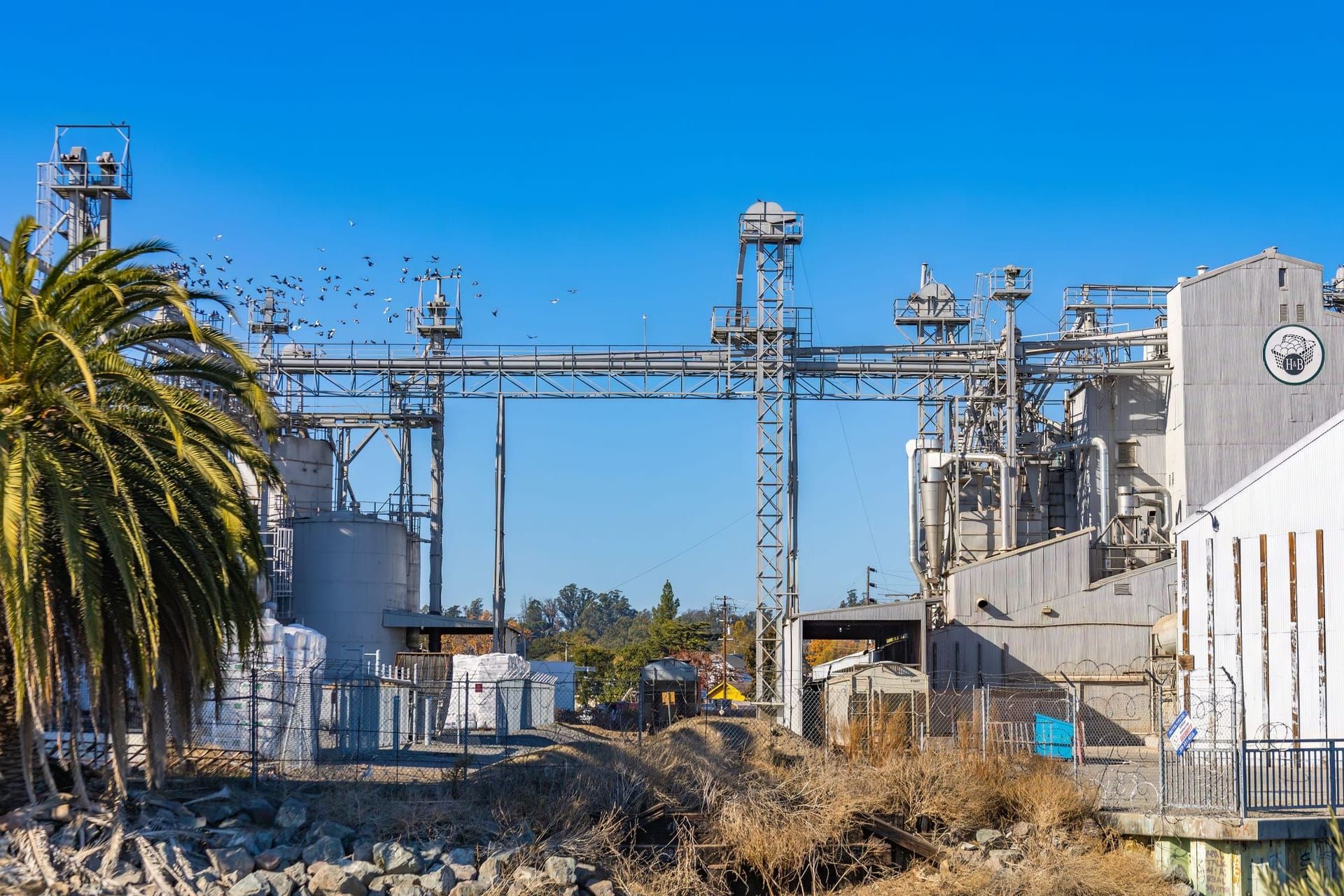
INDUSTRIAL TYPES
What Type of Industrial Property Are You Financing?
Industrial covers several subtypes, and lenders underwrite each one differently.
Warehouse / Distribution
E-commerce and logistics backboneLarge footprint, high clear height (24–36ft), multiple loading docks. Last-mile delivery and 3PL tenants are a major source of demand.
Manufacturing / Production
Heavy power, specialized infrastructurePurpose-built for production operations. Heavy power requirements, overhead cranes, specialized flooring. Often owner-occupied with SBA financing. Lenders evaluate both the business and the property.
Flex / R&D Space
Office + warehouse hybridCombination office-warehouse with flexible layout. Used by tech, biotech, and light assembly businesses. The share of office finish varies by building.
FINANCING OPTIONS
Loan Options for Industrial Properties
Several financing routes are available for industrial property.
Conventional Bank
Stabilized assetsBanks price industrial loans on the tenant, the lease term and the building’s functionality.
SBA 504 / 7(a)
Owner-occupied, 10–20% downIdeal for manufacturers, distributors, and logistics companies buying their own facility.
DSCR Loan
No personal income docsPortfolio investors scaling industrial holdings. No tax returns needed.
CMBS / Conduit
Large assets, non-recourseNon-recourse for large logistics and distribution facilities with creditworthy tenants.
Typical ranges, updated September 2026. Your terms depend on the property, the borrower and the lender.
KEY METRICS
What Lenders Evaluate for Industrial Loans
WORKED EXAMPLE
Example: When Debt Yield, Not the Rate, Caps an Industrial Loan
Larger industrial loans from CMBS and institutional lenders add a third test: debt yield, NOI ÷ loan. Unlike DSCR, it ignores the interest rate — so a lower rate does not raise the loan once debt yield binds. Assumptions for illustration only: a single-tenant building valued at $8,000,000 with $520,000 of NOI on a long NNN lease and a 65% LTV cap, computed with our max loan calculator.
| Bank: 1.25x DSCR, 7.0%, 25 years | CMBS: 1.25x DSCR + 10.5% debt yield, 6.5%, 30 years | |
|---|---|---|
| LTV limit (65%) | $5,200,000 | $5,200,000 |
| DSCR limit | $4,904,879 | $5,484,642 |
| Debt yield limit ($520,000 ÷ 10.5%) | — | $4,952,381 |
| Largest loan | $4,904,000 (DSCR binds) | $4,952,000 (debt yield binds) |
The CMBS quote is 0.5 point cheaper with a longer amortization, yet lends only $48,000 more, because its debt-yield test stops it. When you compare offers, ask each lender which test sets its number — only more NOI moves a debt-yield limit.
Typical ranges, updated September 2026. Your terms depend on the property, the borrower and the lender.
THE PROCESS
How Industrial Property Financing Works
Share Your Deal
Property address, square footage, clear height, dock count, tenant info, and purchase price or estimated value.
Submit to BestLoanUSA
Single application. No hard credit pull. We evaluate across bank, SBA, DSCR, and CMBS options.
Advisor Review
Dedicated advisor evaluates your industrial asset’s specifications, tenant strength, and market position to recommend the strongest financing path.
Lender Matching
We submit to lenders active in industrial. You compare the term sheets lenders return.
Underwriting & Appraisal
Industrial-specific appraisal including physical inspection. Provide lease, operating statements, and environmental reports.
Close & Fund
Conventional: 30–45 days. SBA 7(a): 30–60 days. SBA 504: 60–90 days. CMBS: 45–90 days.
Free tools
Run the numbers
The same metrics a lender checks — free, instant, no signup. Each result links straight into an application.
- Cap Rate Calculator Calculate capitalization rate, estimate property value from NOI, or find the NOI needed to hit your target cap rate. The essential CRE investment metric.
- Rent Per Square Foot Calculator Convert between total rent and per-square-foot rates. Compare lease rates across properties and calculate total annual occupancy cost for commercial spaces.
- DSCR Calculator Calculate your Debt Service Coverage Ratio instantly. See if your property qualifies for CRE financing and which loan programs are available to you.
FAQ
Frequently Asked Questions
Why is industrial real estate considered a strong investment?
E-commerce and logistics have supported demand for warehouse and distribution space, and many industrial buildings are leased on long-term NNN leases that give predictable cash flow. Vacancy varies by market and building size, so lenders look closely at the local market and the tenant.
What makes industrial properties easier to finance?
Simpler building systems than office or retail, long NNN leases and broad tenant demand in many markets. Lenders still underwrite the tenant, the lease term and the building’s functionality (clear height, docks, power).
What is debt yield and why does it matter for industrial loans?
Debt yield is net operating income divided by the loan amount — the return the lender would earn on its money if it took the property. CMBS and institutional lenders set a minimum, and because it ignores the interest rate, a lower rate does not increase the loan once debt yield is the binding test. In our example, $520,000 of NOI at a 10.5% minimum caps the loan at about $4,952,000.
Can I buy a warehouse for my own business?
Yes. SBA 504 and 7(a) are ideal for manufacturers, distributors, and logistics operators buying their own facility. SBA 504 can be 10% down for an existing building when the business has operated more than two years, the building is not special-purpose, and the business occupies at least 51% (60% for new construction). A newer business or a special-purpose plant puts down 15%, and 20% if both apply.
Do environmental concerns affect industrial lending?
Yes. Most lenders require a Phase I Environmental Site Assessment for industrial properties. Properties with contamination history may need Phase II testing. Clean environmental reports are typically required before closing.
What clear height do lenders look for?
Modern logistics tenants want 32–36ft clear height. Buildings with 24ft+ are financeable but older buildings under 20ft may face limited lender appetite and higher vacancy risk. Clear height directly impacts property value and rent rates.
What is the minimum loan amount for industrial?
BestLoanUSA arranges CRE loans from $250K. CMBS lenders usually want larger loans, and SBA loans suit smaller owner-occupied purchases.
Related on BestLoanUSA
Financing options
All loans →- Warehouse A warehouse loan finances a building used for storage, distribution or fulfillment, including cold storage. Investors use bank, DSCR or CMBS loans, typically up to 75% of value; a business that occupies the warehouse can use SBA 504 with as little as 10% down. Industrial & warehouseDSCR
- Investment Property An investment property loan finances a building you own to rent out — multifamily, retail, office, industrial or mixed-use — and is underwritten mainly on the property’s income. Bank, DSCR, CMBS and agency lenders typically lend up to 75–80% of value at about 6.5–8.75%. CMBSDSCR
- What Is a CRE Loan? A commercial real estate loan is financing for income-producing or business-use property — offices, retail, industrial, multifamily (5+ units) — underwritten on the property’s cash flow and value as well as the borrower, not a home mortgage. Industrial & warehouseCMBS
- CRE Refinancing A commercial real estate refinance replaces your existing mortgage with a new loan — to lower the rate, replace a maturing balloon, move from floating to fixed, or take cash out. To refinance, check your current loan’s maturity and prepayment penalty, get the property appraised, show that its net operating income covers the new payment at the lender’s minimum DSCR, compare term sheets and close — the new lender pays off the old loan, usually in 30–60 days. Bank, SBA 504, CMBS and DSCR lenders price refinances at about 6.25–8.75%. CMBSDSCR
Guides & articles
All articles →- Warehouse and Industrial Property Loans for Small Businesses How small businesses finance a warehouse or industrial building: SBA 504, bank and other options, down payments, and what lenders look for. Industrial & warehouseSBA 504
- The 2026 CRE Maturity Wall: Refinancing a Loan That Comes Due $875 billion of commercial mortgages are scheduled to mature in 2026. How to size the gap when a low-rate loan refinances at today’s rates, and how to close it. DSCRIndustrial & warehouse
- SBA 504 Loans for Commercial Real Estate: 10% Down How the SBA 504 loan lets a business buy its own commercial property with as little as 10% down — the structure, who qualifies, costs and the process. SBA 504SBA loans
Glossary
All terms →More calculators
All calculators →- Debt Yield Calculator Calculate Debt Yield (NOI ÷ Loan Amount) — the metric CMBS and institutional lenders prioritize over DSCR and LTV. Find your maximum loan amount based on target debt yield. Debt yieldCMBS
- NOI Calculator Calculate your property's Net Operating Income with a detailed income and expense breakdown. NOI drives your DSCR, cap rate, and property valuation. NOIDSCR
- Defeasance Calculator Estimate the total cost of defeasing your CMBS or conduit commercial loan. See the Treasury portfolio cost, transaction fees, and how it compares to yield maintenance. CMBSInterest rates