
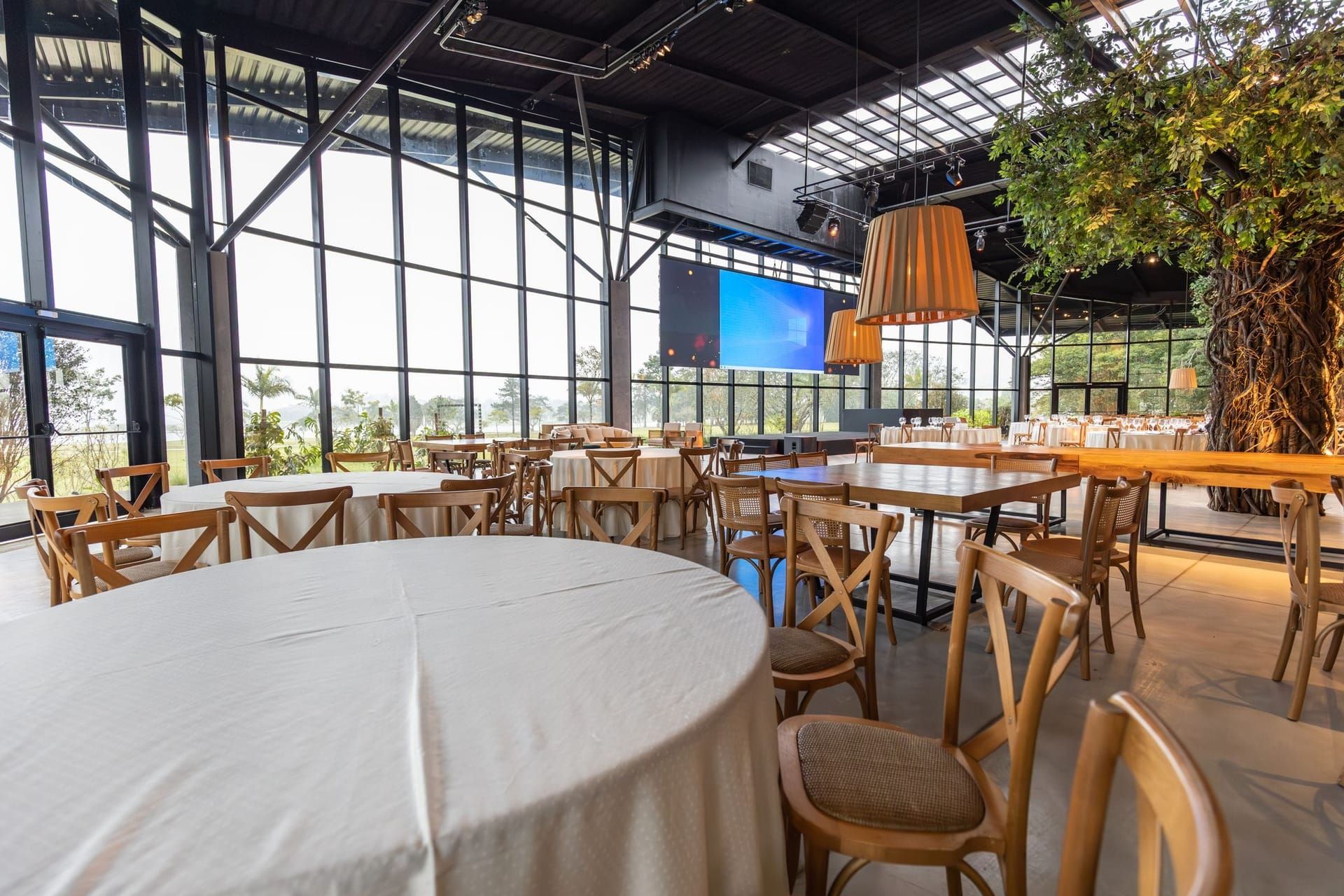
RESTAURANT TYPES
What Type of Restaurant Property Are You Financing?
Restaurant real estate is a specialized CRE property type. Lender appetite depends on concept type and operator track record.
Full-Service Restaurant
Sit-down dining, bar, kitchenFree-standing or end-cap locations with full kitchen, dining room, and bar. Usually the highest buildout cost of the three. Lenders look for operating history and a proven concept.
Fast Casual / QSR
Counter-service, drive-thru potentialChipotle-style counter service or drive-thru concepts. Usually a lower buildout cost than full-service. Franchise locations with an established brand are often easier to finance.
Franchise Location
Brand-backed, proven systemsNational and regional brands. Franchise backing can improve lender confidence. SBA is a common financing path — the brand must be listed in the SBA Franchise Directory. Some franchisors have preferred lender programs.
FINANCING OPTIONS
Loan Options for Restaurant Properties
SBA is a common financing path for restaurant owner-operators. Conventional bank loans suit established operators who can put more down.
SBA 504
Best for buying your restaurant buildingKitchen buildout, hood systems, walk-in coolers, and grease traps can be rolled into the total project cost. 10% down for most projects; 15% for a business under two years old or a special-purpose building, 20% if both.
SBA 7(a)
Real estate + equipment + working capitalOne loan covering property, equipment (ovens, POS, HVAC), buildout, and opening working capital. Most flexible for new restaurant launches.
Conventional Bank
Established multi-unit operatorsUsually closes faster than SBA but needs a larger down payment. Best for established operators with strong financials.
Equipment Financing
Kitchen equipment onlyFor operators who need equipment separately from real estate. Ovens, walk-ins, POS systems, furniture.
Typical ranges, updated September 2026. Your terms depend on the property, the borrower and the lender.
KEY METRICS
What Lenders Evaluate for Restaurant Loans
WORKED EXAMPLE
Example: How Much Cash Flow a Restaurant Needs to Own Its Building
Example: an established quick-service operator with $2,400,000 of annual sales buys its $1,800,000 building and spends $400,000 on a kitchen and dining refresh — a $2,200,000 SBA 504 project with 10% down. Assumptions for illustration only: a 6.5% CDC rate fixed for 25 years and a 7.0% bank rate amortized over 25 years, computed with our SBA 504 calculator.
| Amount | |
|---|---|
| Down payment (10%) | $220,000 |
| CDC $880,000 + bank $1,100,000 | $5,942 + $7,775 = $13,716/mo |
| Annual debt service | $164,592 |
| Cash flow needed at 1.25x | $205,740 |
| As a share of sales | about 8.6% |
So the restaurant must turn about 8.6 cents of every sales dollar into cash flow, after food, labor and operating costs but before the mortgage. The rent it no longer pays counts toward that — lenders add back the current rent when they look at an owner buying the building it already leases. If the concept is a franchise, the brand must be listed in the SBA Franchise Directory for an SBA loan.
Typical ranges, updated September 2026. Your terms depend on the property, the borrower and the lender.
THE PROCESS
How Restaurant Property Financing Works
Define Your Project
Buying an existing restaurant, building out a new space, or purchasing land for a drive-thru? Share property details, concept, and buildout scope.
Submit to BestLoanUSA
Single application with restaurant financials, personal credit, and project details. No hard credit pull.
Advisor Review
Dedicated advisor evaluates your concept, operating history, franchise backing, and buildout requirements to recommend SBA, conventional, or combined financing.
Lender Matching
We submit to food-service-experienced lenders. Franchise operators may access preferred lender programs.
Underwriting & Appraisal
Restaurant-specific appraisal. Provide 2–3 years tax returns, P&L, bank statements, franchise agreement (if applicable), and buildout estimates.
Close & Build Out
SBA 7(a): 30–60 days; SBA 504: 60–90 days. Conventional: 30–45 days. TI funds released on draw schedule during kitchen and dining room construction.
Free tools
Run the numbers
The same metrics a lender checks — free, instant, no signup. Each result links straight into an application.
- SBA 504 Loan Calculator Estimate your SBA 504 loan structure — see the three-part split (borrower, CDC, bank), monthly payments for each portion, and total project financing.
- SBA 7(a) Payment Calculator Estimate monthly payments on an SBA 7(a) loan with Prime + spread variable rate. See how rate changes affect your payment and plan for different scenarios.
- Commercial Mortgage Calculator Estimate your monthly CRE loan payment, total interest cost, and full amortization schedule. Compare loan structures before you apply.
FAQ
Frequently Asked Questions
Is it hard to get financing for a restaurant property?
Restaurant lending has a reputation for being difficult, but the reality depends on your track record. Established operators with 2+ years of profitable history, strong credit, and especially franchise backing can access competitive SBA and conventional financing. First-time restaurant owners face more scrutiny but SBA 7(a) remains available with a solid business plan.
How do lenders decide if a restaurant can afford to buy its building?
They compare the restaurant’s cash flow, plus the rent it will stop paying, with the new loan payments — usually looking for about 1.25 times coverage. In our example, a $2,200,000 SBA 504 project costs $164,592 a year, so the restaurant needs about $205,740 of cash flow — roughly 8.6% of $2,400,000 in sales.
Can I include kitchen buildout costs in my loan?
Yes. SBA 504 and 7(a) allow you to roll kitchen buildout, hood systems, grease traps, walk-in coolers, dining room renovation, and equipment into the total project financing. SBA 7(a) can also include working capital, so one loan can often cover most of the project.
Does franchise backing help with financing?
Usually. An established franchise brand gives lenders a proven operating system and unit economics to review, and some franchisors have preferred lender relationships. For SBA financing, the brand must be listed in the SBA Franchise Directory.
How much does a restaurant buildout cost?
Buildout cost varies widely with concept, size, the condition of the space and local construction costs, so lenders size the loan on contractor bids. The kitchen hood system, grease trap, plumbing, and walk-in cooler are usually among the largest line items.
What if I'm a first-time restaurant owner?
First-time operators face higher scrutiny. Lenders want to see relevant food service experience (even as a manager), a detailed business plan, a larger down payment than an established operator, and ideally franchise backing. SBA 7(a) is the most accessible path for first-time operators with strong personal credit and industry experience.
Should I buy or lease my restaurant space?
If you plan to operate for 5+ years and can afford the down payment, buying builds equity and locks in occupancy cost. SBA 504 makes this accessible at 10% down for an established business (15% if under two years old). Leasing preserves capital but exposes you to rent increases.
Related on BestLoanUSA
Financing options
All loans →- Tenant Improvement Tenant improvement (TI) financing pays for the buildout of a commercial space — walls, electrical, HVAC, fixtures — whether you own the building or lease it. Owners can roll TI into an SBA 504 or conventional loan; tenants often combine SBA 7(a) with the landlord’s TI allowance. Tenant improvementsRestaurants
- Medical Office A medical office loan finances a building used for healthcare — a physician practice, outpatient clinic or surgery center. Practitioners who occupy it can use SBA 504 or 7(a) with up to 90% financing; investors buying a leased medical building use bank or DSCR loans. Tenant improvementsSBA 504
- Dental Office A dental office loan finances the space a practice operates from — buying the building or condo, financing a buildout, or acquiring a practice with its real estate. Dentists who occupy the space can use SBA 504 or 7(a) with as little as 10% down. Tenant improvementsSBA 504
- Gym & Fitness A gym or fitness center loan finances the facility — buying the building, a buildout in leased space, or an expansion — often alongside equipment financing. Owner-operators can use SBA loans with 10–15% down; bank loans suit established operators. Tenant improvementsSBA 504
Guides & articles
All articles →- Restaurant Building Loans: Buying vs. Leasing Your Location Buying vs. leasing a restaurant building: how owners finance the property with SBA and bank loans, and when owning your location pays off. RestaurantsTenant improvements
- California Business Loans: SBA, State Programs & Lenders California has more small businesses than any state in the country — and some of the most complex lending rules. Here's how to navigate financing in the state that now requires lenders to disclose APR on commercial loans. RestaurantsSBA 504
- Texas Business Loans: SBA, State Programs & Lenders Texas has more small businesses than almost any state — and more lenders competing for them. Here's how to navigate the Texas business lending landscape, from Houston to Dallas to San Antonio. RestaurantsSBA loans