
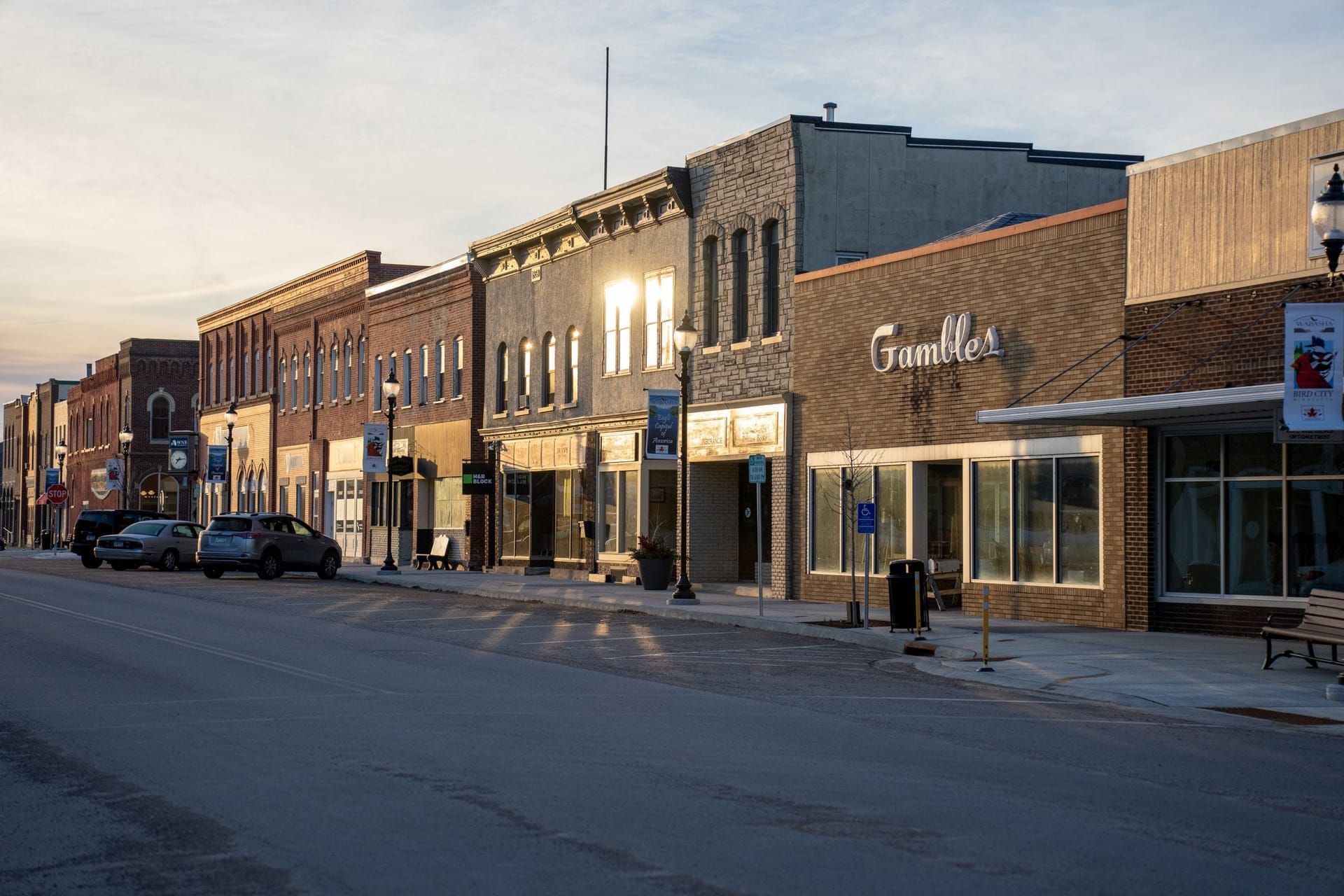
RETAIL PROPERTY TYPES
What Type of Retail Property Are You Financing?
Retail covers a wide spectrum. Lender appetite varies by tenant mix, lease structure, and anchor presence.
Strip Mall / Retail Center
Multi-tenant, inline spacesMultiple inline tenant spaces, often anchored by a grocery, pharmacy, or national chain. NNN lease structure common. Several tenants spread vacancy risk.
Single-Tenant NNN
Net-leased, passive investmentOne tenant, one lease, triple net. Tenant pays taxes, insurance, and maintenance. Common with national pharmacy, discount and coffee chains. Low management burden; lenders focus on the tenant’s credit and remaining lease term.
Owner-Occupied Storefront
Your business, your buildingSmall to mid-size retail space where the owner operates the business. Boutiques, salons, service businesses. SBA 504 and 7(a) eligible when your business occupies at least 51% of the building; SBA 504 from 10% down. Build equity instead of paying rent.
FINANCING OPTIONS
Loan Options for Retail Properties
The best loan structure depends on whether you're buying, refinancing, or investing — and whether you occupy the space.
Conventional Bank
Stabilized retail, anchored preferredBest for stabilized retail with national or credit tenants and proven operating history.
SBA 504 / 7(a)
Owner-occupied retail, 10% downBest for business owners buying their own retail space — franchisees, boutique owners, service businesses.
DSCR Loan
No personal income docs neededIdeal for investors building a retail portfolio. No tax returns. Qualification based on property NOI.
CMBS / Conduit
Large retail, non-recourseNon-recourse for anchored retail centers with credit tenants. Yield maintenance prepayment.
Typical ranges, updated September 2026. Your terms depend on the property, the borrower and the lender.
KEY METRICS
What Lenders Evaluate for Retail Loans
Retail underwriting focuses on tenant quality, lease structure, and foot traffic fundamentals.
WORKED EXAMPLE
Example: How Lease Term Changes a Single-Tenant Loan
On a single-tenant net-lease building, the tenant’s credit and the years left on its lease drive the loan. A long lease with a strong tenant is sized on the rent; with only a few years left, many lenders size on a lower re-leasing or “dark” scenario. Assumptions for illustration only: a $2,300,000 building leased NNN at $150,000 a year, a 2% allowance for vacancy and reserves, a 7.0% rate on a 25-year amortization, a 1.25x minimum DSCR and a 70% LTV cap — computed with our max loan calculator.
| Sized on the current rent | Sized on 80% of the rent (re-leasing scenario) | |
|---|---|---|
| Underwritten NOI | $147,000 | $117,600 |
| Largest loan | $1,386,000 (60.3% LTV) | $1,109,000 (48.2% LTV) |
| Cash down | $914,000 | $1,191,000 |
The same building can mean $277,000 more equity when the lease is short or the tenant is weak. A renewal signed before you refinance — or a purchase price that reflects the remaining term — is worth more than a lower rate.
Lease documents retail lenders ask for:
- Leases and amendments for every tenant, with a rent roll showing expirations — lenders look at how much rent rolls in the loan term.
- Estoppel certificates — each tenant confirms its rent, term and that the landlord is not in default.
- SNDAs (subordination, non-disturbance and attornment agreements) — major tenants agree their leases sit behind the new mortgage.
- Co-tenancy and go-dark clauses — rights that let a tenant cut rent or leave if an anchor closes.
- Sales reports where leases require them, which show whether rent is sustainable.
Typical ranges, updated September 2026. Your terms depend on the property, the borrower and the lender.
STRIP CENTER REFINANCE
How Do You Refinance a Retail Strip Center?
To refinance a retail strip center, you give a new lender the rent roll, every lease and 12 months of operating statements, and the lender sizes the loan on the income those leases will still produce during its term. Three things set the loan amount: how much of the rent expires before the new loan matures, whether the center is at stabilized occupancy (85–90%+ leased), and the appraised value. A fully leased center with staggered expirations refinances into a permanent loan; one with vacancies or heavy near-term rollover usually needs a bridge loan first.
What a strip center lender reviews:
- Rent roll and lease expiration schedule — the share of rent that rolls during the loan term, and whether expirations are spread out or bunched together.
- Trailing 12 months (T-12) and the last two years of operating statements, including CAM reimbursements on NNN leases.
- Tenant mix — service, food and medical tenants versus tenants exposed to online competition, and whether any tenant pays a large share of the rent.
- Anchor and co-tenancy — whether the center has an anchor, and which leases let a tenant cut rent or leave if it closes.
- Re-leasing costs — lenders deduct or escrow TI/LC reserves for the tenant improvements and leasing commissions that expiring leases will cost, plus replacement reserves for roofs and parking lots.
- Your current loan — the payoff, the maturity date and any prepayment penalty, which can decide whether to refinance now or at maturity.
Which refinance loan fits the center:
| Your center | Usual loan | Rate | LTV | Term |
|---|---|---|---|---|
| Stabilized, staggered leases, local or regional tenants | Bank or credit union, usually with a personal guarantee | 6.5–8% | 65–75% | 5–10 yr on 20–30 yr amortization |
| Stabilized, investor owner who doesn’t want to qualify on tax returns | DSCR loan | 6.75–8.75% | Up to 75–80% | 5–30 yr |
| Larger stabilized center, owner wants non-recourse | CMBS, prepaid by yield maintenance or defeasance | 7–8% | Up to 75% | 5–10 yr |
| Below stabilized occupancy, or major leases expiring soon | Bridge loan, interest-only, then a permanent refinance | 6.25–8.25% | 65–80% | 12–36 mo |
Example: two leases expiring before the refinance. Assumptions for illustration only: an unanchored 12,000-square-foot strip center with 8 suites, appraised at $3,200,000, producing $240,000 of net operating income with every suite leased. Two suites (3,000 square feet, $54,000 of that income) have leases ending within 18 months. The existing loan has a $2,000,000 payoff. The new loan is at 7.0% on a 25-year amortization with a 1.25x minimum DSCR and a 70% LTV cap; the TI/LC deduction is an assumed $1.50 per square foot a year ($18,000). Computed with our max loan calculator.
| Sized on the rent roll as leased | After a $18,000 TI/LC deduction | Two expiring suites treated as vacant | |
|---|---|---|---|
| Underwritten NOI | $240,000 | $222,000 | $186,000 |
| Limit that binds | 70% LTV | 1.25x DSCR | 1.25x DSCR |
| Largest loan | $2,240,000 (70.0% LTV) | $2,094,000 (65.4% LTV) | $1,754,000 (54.8% LTV) |
| Versus the $2,000,000 payoff, before closing costs | $240,000 over | $94,000 over | $246,000 short |
The same center can refinance with cash left over or need $246,000 more equity, depending on how the lender treats two leases. With both suites vacant the center is 75% occupied, below the stabilized level, so a permanent lender may decline it outright. Signing renewals before you apply, or refinancing well ahead of maturity while the leases are still in place, protects the loan amount more than shopping for a lower rate. If the new loan is larger than the payoff, the difference can come out as a cash-out refinance. If the numbers fall short, a bridge loan can carry the center through lease-up before a permanent refinance. Run your own rent roll through the max loan calculator, or apply to have an advisor size it with lenders.
Typical ranges, updated September 2026. Your terms depend on the property, the borrower and the lender.
THE PROCESS
How Retail Property Financing Works
Share Your Deal
Property address, purchase price or value, rent roll, tenant mix, lease terms, and operating expenses.
Submit to BestLoanUSA
Single application. No hard credit pull. We evaluate your retail property across all loan options.
Advisor Review
Dedicated advisor evaluates your retail asset’s tenant mix, lease structure, anchor presence, and cash flow to recommend the strongest financing path.
Lender Matching
We submit to retail-experienced lenders. Term sheets from interested lenders are compared side by side.
Underwriting & Appraisal
Lender orders a retail-specific appraisal. Provide rent roll, leases, operating statements, and tax returns.
Close & Fund
Conventional: 30–45 days. SBA 7(a): 30–60 days; SBA 504: 60–90 days. CMBS: 45–90 days.
Free tools
Run the numbers
The same metrics a lender checks — free, instant, no signup. Each result links straight into an application.
- Cap Rate Calculator Calculate capitalization rate, estimate property value from NOI, or find the NOI needed to hit your target cap rate. The essential CRE investment metric.
- Rent Per Square Foot Calculator Convert between total rent and per-square-foot rates. Compare lease rates across properties and calculate total annual occupancy cost for commercial spaces.
- DSCR Calculator Calculate your Debt Service Coverage Ratio instantly. See if your property qualifies for CRE financing and which loan programs are available to you.
FAQ
Frequently Asked Questions
What retail properties qualify for commercial financing?
Most retail properties qualify including strip malls, shopping centers, single-tenant NNN properties, storefronts, and pad sites. Lenders evaluate tenant quality, lease terms, location, and property condition.
What is a NNN lease and why do lenders prefer it?
A triple net (NNN) lease requires the tenant to pay property taxes, insurance, and maintenance in addition to rent. This shifts operating expenses to the tenant, making cash flow more predictable and reducing risk for lenders. NNN properties with credit tenants generally get more favorable financing terms.
How do lenders finance a single-tenant NNN property?
On the tenant’s credit and the remaining lease term as much as the building. With a long lease to a strong tenant, the loan is sized on the rent, often up to the lender’s LTV cap; with only a few years left, many lenders size on a lower re-leasing scenario. In our example, a $2,300,000 building leased at $150,000 a year supports $1,386,000 on the current rent but $1,109,000 at 80% of it.
How do you refinance a retail strip center?
Send the new lender the rent roll, all leases, 12 months of operating statements and your current loan payoff. The lender sizes the loan on the income the leases will still produce during the new loan term, deducts reserves for re-leasing costs, and caps it by LTV and DSCR. A fully leased center with staggered lease expirations usually refinances with a bank, DSCR or CMBS loan; a center with vacancies or several leases expiring soon usually needs a bridge loan first.
Can I refinance a strip center with vacancies?
Yes, but the loan type depends on occupancy. Permanent lenders generally want the center stabilized, 85–90%+ leased, and they size the loan on the rent actually in place. Below that, a bridge loan can refinance the center on an interest-only basis while you lease up, and a permanent loan replaces it once the center is stabilized. In our example, treating two of eight suites as vacant cut the largest loan from $2,240,000 to $1,754,000.
Can I take cash out when refinancing a strip center?
Yes, if the new loan is larger than your payoff and closing costs. A cash-out refinance on a strip center is limited by the lender’s LTV cap and by DSCR on the current rents, and lenders may hold back part of the proceeds until a new tenant’s rent starts or a renewal is signed. Our cash-out refinance page lists the LTV limits by loan type.
Can I buy a retail space for my own business?
Yes. SBA 504 and 7(a) loans are available for owner-occupied retail with as little as 10% down. This is popular for franchise owners, restaurant operators, salon owners, and service businesses.
How does anchor tenant presence affect financing?
Anchored retail centers (with grocery, pharmacy, or national chain tenants) are usually easier to finance than unanchored. Anchor tenants drive foot traffic, reduce vacancy risk, and signal stability to lenders, which can mean better pricing and leverage.
Is retail still a good investment after e-commerce growth?
It depends on the property. Lenders tend to be more comfortable with grocery-anchored and service-based retail (medical, fitness, personal services) than with tenants most exposed to online competition, such as apparel or big-box space without a clear re-leasing plan. Location, tenant mix and lease terms drive the underwriting.
What is the minimum loan amount?
We arrange CRE financing from $250K to $50M+. CMBS generally suits larger loans, while SBA loans can fit smaller owner-occupied purchases.
Related on BestLoanUSA
Financing options
All loans →- CRE Refinancing A commercial real estate refinance replaces your existing mortgage with a new loan — to lower the rate, replace a maturing balloon, move from floating to fixed, or take cash out. To refinance, check your current loan’s maturity and prepayment penalty, get the property appraised, show that its net operating income covers the new payment at the lender’s minimum DSCR, compare term sheets and close — the new lender pays off the old loan, usually in 30–60 days. Bank, SBA 504, CMBS and DSCR lenders price refinances at about 6.25–8.75%. CMBSRefinancing
- Investment Property An investment property loan finances a building you own to rent out — multifamily, retail, office, industrial or mixed-use — and is underwritten mainly on the property’s income. Bank, DSCR, CMBS and agency lenders typically lend up to 75–80% of value at about 6.5–8.75%. CMBSDSCR
- Hard Money Takeout A hard money takeout refinance replaces a short-term hard money or bridge loan with a long-term loan once the property is renovated, leased or stabilized. Bank, SBA and DSCR lenders typically lend up to 75% of value at about 6.25–8.75%, compared with 9–13% for hard money. RefinancingDSCR
- Office An office building loan finances the purchase or refinance of office property, from a single-tenant building to a multi-tenant complex. A business that occupies the space can use SBA 504 with as little as 10% down; investors use bank or DSCR loans, typically up to 75–80% of value. CMBSDSCR
Guides & articles
All articles →- The 2026 CRE Maturity Wall: Refinancing a Loan That Comes Due $875 billion of commercial mortgages are scheduled to mature in 2026. How to size the gap when a low-rate loan refinances at today’s rates, and how to close it. RefinancingDSCR
- Cash-Out Refinance on Commercial Property: Accessing Equity How a cash-out refinance on commercial property works: how much equity you can take out, what lenders require, the costs, and when it makes sense. RefinancingSBA 504
- Commercial Real Estate Refinancing: When and How to Qualify When refinancing a commercial mortgage makes sense, your options before a balloon comes due, and what lenders need to approve the new loan. RefinancingPrepayment penalty
Glossary
All terms →More calculators
All calculators →- Defeasance Calculator Estimate the total cost of defeasing your CMBS or conduit commercial loan. See the Treasury portfolio cost, transaction fees, and how it compares to yield maintenance. CMBSPrepayment penalty
- Debt Yield Calculator Calculate Debt Yield (NOI ÷ Loan Amount) — the metric CMBS and institutional lenders prioritize over DSCR and LTV. Find your maximum loan amount based on target debt yield. CMBSDSCR
- NOI Calculator Calculate your property's Net Operating Income with a detailed income and expense breakdown. NOI drives your DSCR, cap rate, and property valuation. NOIDSCR