Typical ranges, updated September 2026. Your terms depend on your revenue, credit, time in business and the lender.
Worked example
Adding ADAS Calibration and EV Service: Billed Hours That Pay for It
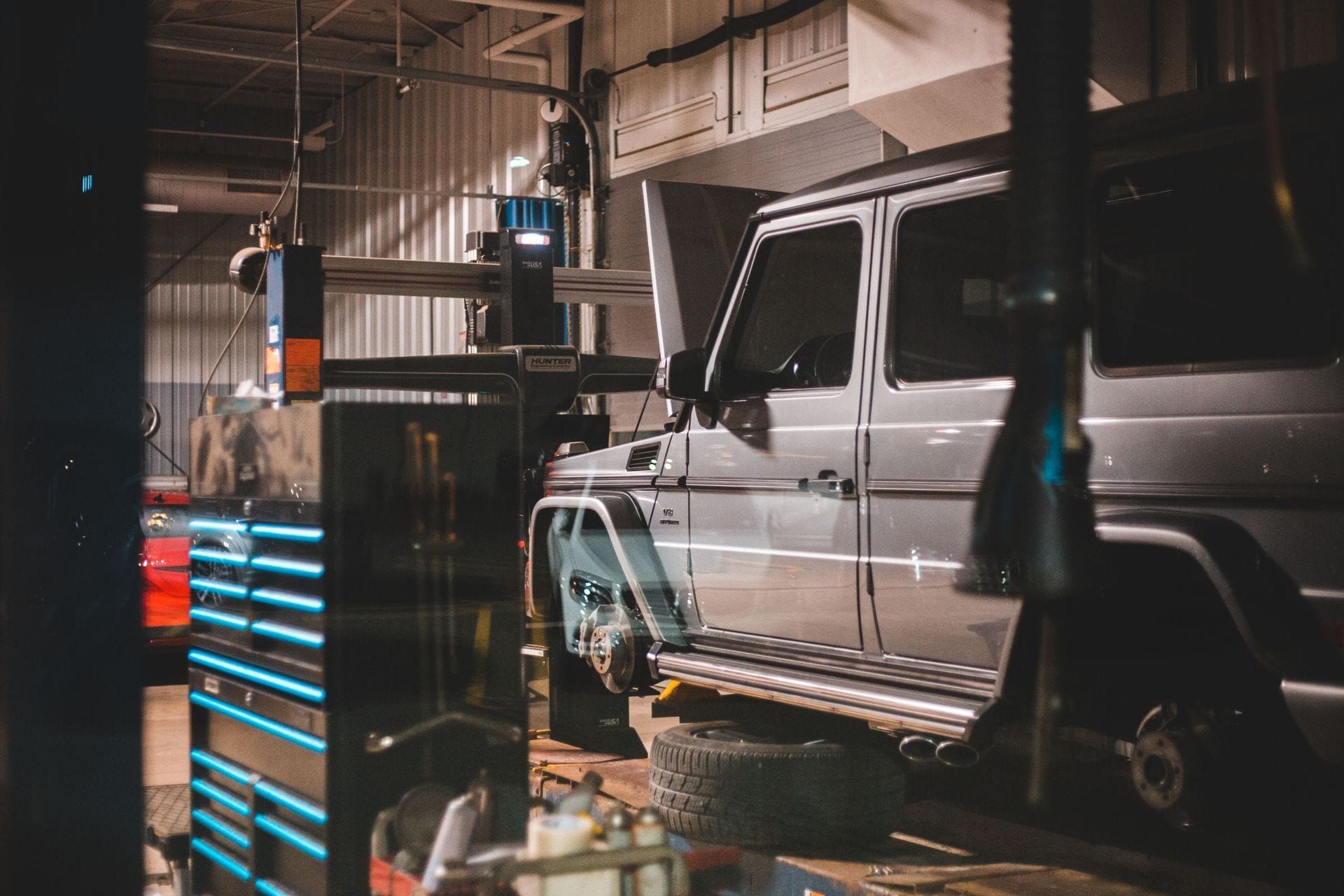
Example: a shop adds advanced driver-assistance (ADAS) calibration and EV service equipment for an assumed $120,000. Assumptions for illustration only: 10% down and a 5-year equipment loan at 9% (inside today’s 6.5–20% range), computed with the payment formula of our commercial mortgage calculator, and a $150 shop labor rate.
Amount
ADAS + EV equipment (assumed)
$120,000
Down payment (10%)
$12,000
Equipment loan, 5 years, 9%
$108,000 — $2,242/mo
Billed hours at $150 to cover it
about 15 a month
Calibration work that a shop used to send out brings those hours in-house, so fifteen billed hours a month covers the payment — technician training, floor space and software subscriptions come on top. The equipment is the collateral; lenders will ask for your current car count and how much work you now sublet. For buying the building, see our auto repair property guide.
FAQ
Auto Repair Shop Loan FAQs
Common questions about auto repair shop financing
What is the best loan for auto repair equipment?
Equipment financing is purpose-built for auto repair — approval in 1–5 days, 600+ credit, and the equipment serves as collateral. Covers lifts, alignment systems, tire machines, diagnostic scanners, air compressors, and transmission equipment. Rates run 6.5–20% APR over 2–7 years. Most lenders finance 80–100% of equipment cost.
Can I finance ADAS calibration or EV service equipment?
Yes, usually with an equipment loan secured by the equipment. In our example, $120,000 of equipment with 10% down over five years at 9% costs about $2,242 a month — about 15 billed hours at $150. Lenders will ask how much calibration work you now send out.
Can an auto repair shop get an SBA loan?
Yes. SBA 7(a) loans are well-suited for established shops, especially for buying real estate, multi-bay expansion, or acquiring a competitor. Rates run 8.5–11.5% APR over 10–25 years. SBA sets no minimum time in business; most lenders want 680+ credit and about two years of history. SBA 504 works for shop building purchases from 10% down (15% if the building is special-purpose or the business is under two years old).
How can shops add EV service capabilities?
EV service additions (charging equipment, training, specialized tools) run $50K–$200K. Business term loans (3–14 days, 620+ credit) are the most flexible option. SBA loans work for larger conversions. Some states offer grants or incentives for EV service adoption. EV revenue is growing 40%+ annually in most markets.
How do auto repair shops manage slow season cash flow?
Business lines of credit are the most efficient tool — draw for parts inventory and payroll during slow months (typically January–March), repay during busy spring and fall seasons. A $45K–$100K LOC set up during a busy period costs nothing until drawn.
What revenue does an auto repair shop need for a loan?
Alternative lenders typically want $15K+/month in revenue. Bank term loans and SBA loans require $30K+/month and demonstrable profitability. Equipment financing is more flexible — it evaluates equipment value as collateral rather than solely revenue. Show 6–12 months of consistent bank deposits.
Can I get a loan for a second auto repair location?
Yes. SBA 7(a) loans up to $5M work well for multi-location expansion. Business term loans are faster (1–2 weeks) for smaller second locations. Lenders want to see your first location profitable for 12+ months and strong management systems in place. A well-documented first location increases approval odds significantly.